
The Purpose
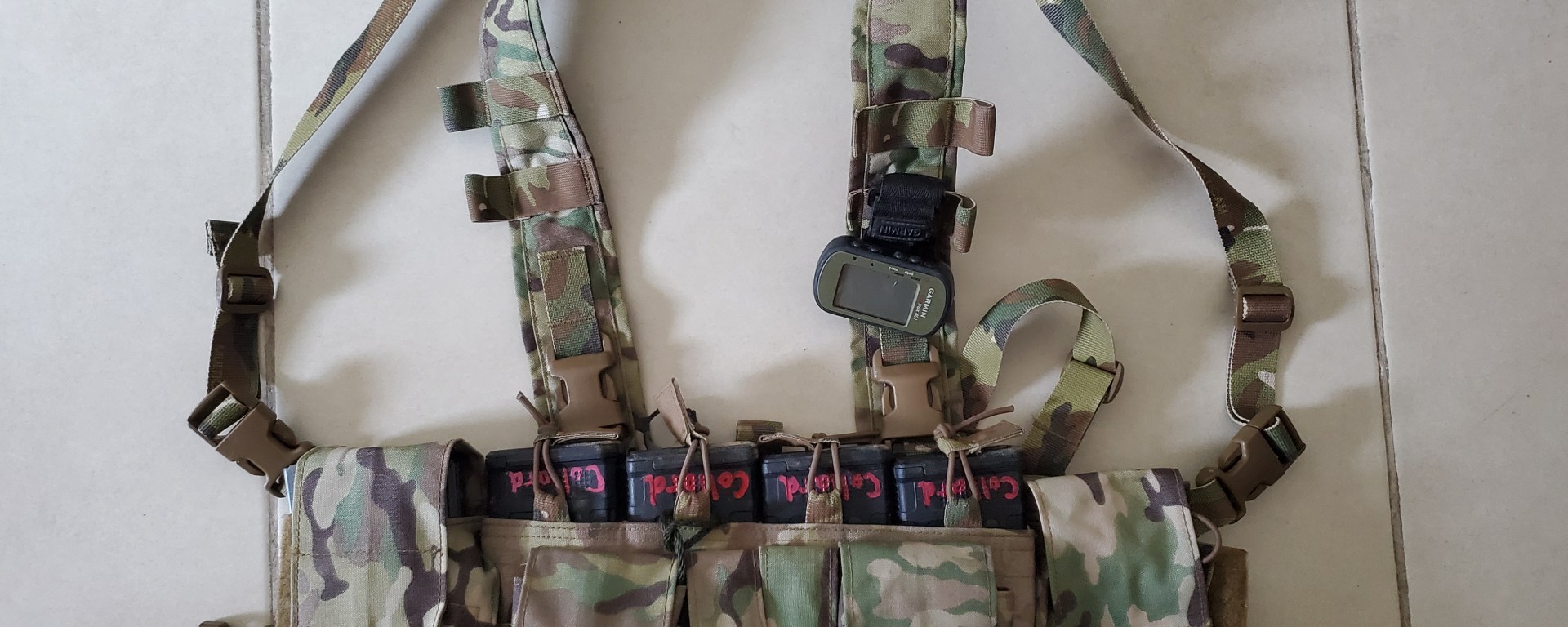
The chest rig is the primary method used by soldiers to carry their combat load in lieu of mounting pouches on their body armor. This makes soldiers carry lighter loads, that are less cumbersome and more quiet as a result. The reasons to not wear body armor are numerous so I won’t get too deep into the weeds in that department, instead I’m going to focus on what your chest rig needs to be able to carry in the field. This is the bare minimum, and subject to change depending on the mission and role, but generally this is what you want to be able to carry on your body, ready to fight at a moments notice.
- Ammunition (6-30 round magazines)
- IFAK
- Grenades (2-HE)
- Navigation kit (compass, map, protractor, map markers, GPS)
- Knife (combat/bushcraft)
- Headlamp
- Batteries (NVG/Headlamp/GPS)
- NVG Pouch
The idea to key in on with chest rigs is carrying everything you need to fight at the ready, so that if necessary you can drop your ruck sack and move quickly to react to unexpected contact. It places everything close so you can tell how many magazines you have, how many grenades, where your night-vision is, where your knife is, etc. It’s important to put everything in the same place, once you figure out how you want all your kit to be situated. This is especially important so that at night you can reach to pouch and grab what you need without even seeing it, knowing right where it would be and exactly where you need to put it back at.
The History
Contrary to popular belief, chest rigs were not designed by the elite Rhodesian military. The modern chest rig design was first developed by the Chinese Communists for the distinctively curved Kalashnikov magazines in the 1960’s. Extremely simple in design, purpose built to only carry magazines and nothing else, these rough pieces of kit were used extensively in the Vietnam War by NVA forces. Throughout the war, some of these chest rigs were used by US SOF who were carrying AK47’s on clandestine missions where foreign made weapons and uniforms were necessary. These were different than the M56 webbing the Army was issuing at the time, that were distinct in that the loadout was placed around the waist and straps that went over the shoulder for support. The ChiCom chest rig kept magazines close to the body and higher on the torso, verses M56 Webbing that had a tendency to chaff on the wearers hips and increase fatigue.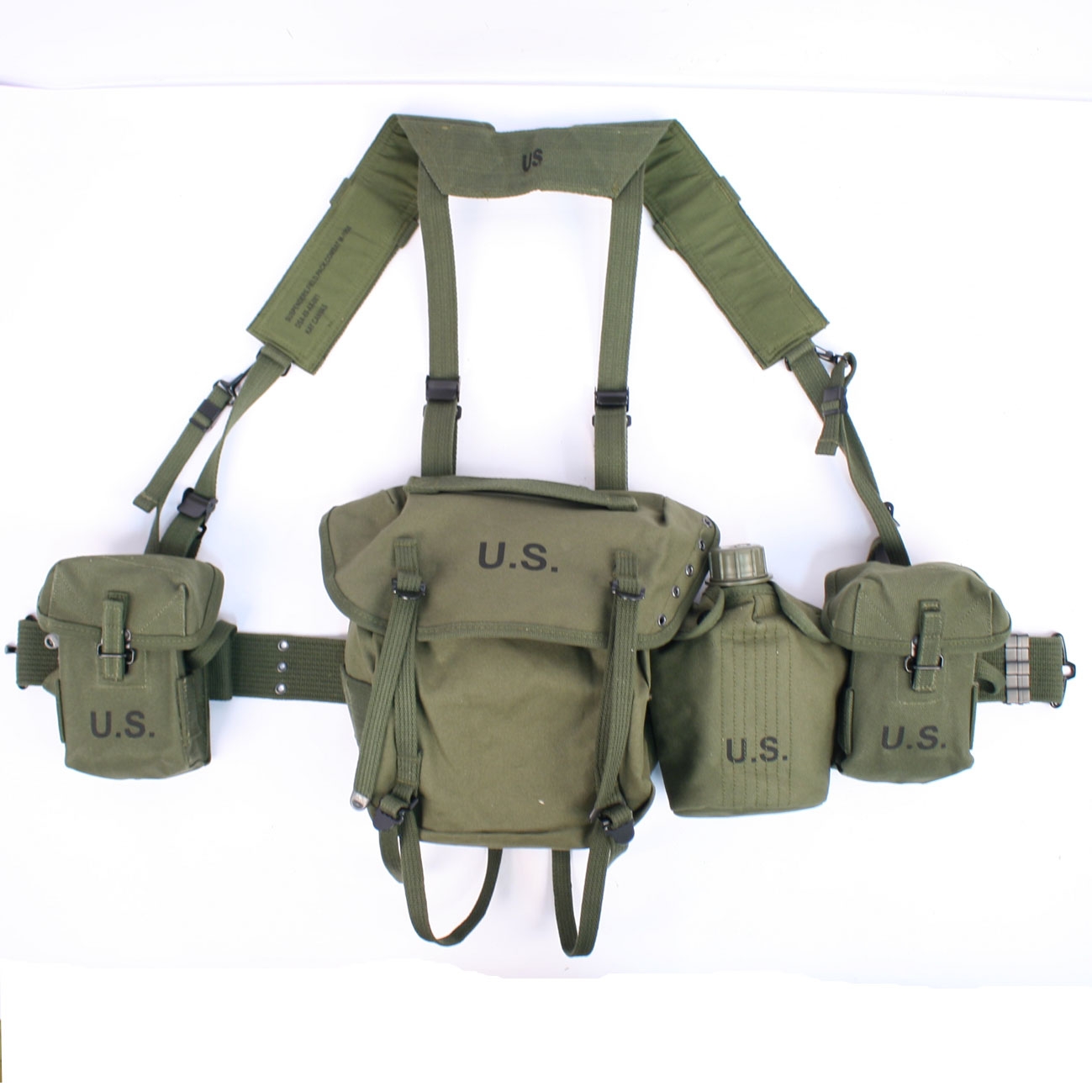
U.S. Army Issued M56 webbing
Post-Vietnam, the chest rig became popular with the UKSF community as well as the Anglo-based militaries of Africa. US SOF units continued to issue and use specialty chest rigs on occasion, while the conventional Army was behind the curve and still issuing equipment like the M56 and other webbing equipment leading up to the FLC, or Fighting Load Carrier that is still common use in Army Reserve/National Guard units as well as support units within the active Army. Many units, including my first in 2013, required that chest rigs be worn over body armor that had the same mounting system as the FLC did. During this time, the Ranger Regiment as well as the Special Forces had begun widely issuing so called “Rhodesian” chest rigs. Another prime example of the Army being years behind the learning curve.
Using issued pouches on the FLC, the most common setup utilized two canteen pouches on the left and right hip, two-3 magazine shingles on the left and right of the front zipper, a IFAK on the back left belt portion, and accompanying grenade pouches on the upper chest portion. Of course, leaders would add administrative pouches with map markers, compasses, maps, and other admin necessities. While some units allowed their soldiers to setup their own equipment how they preferred it to be, most had stringent unit Standard Operating Procedures that NCO’s and Officer’s refused to move away from. If it was good for them, it should be good for everyone else. This type off thinking, while toxic in the grown-up portions of the Army, is rampant and common in the conventional force.
The main issue with the FLC is if you are required to wear it over your body armor, it has a tendency to slide and slosh when fully loaded and needs constant adjustment as a result. Furthermore, it adds considerable girth to the already thiccc (not a typo) IOTV. When worn solo, the FLC is not nearly as bad, however it is known to add pressure points and chaffing when worn under a ruck for even short movements.
Somewhere along the line, the TAP (Tactical Assault Panel) began to be issued to units deploying to Afghanistan, and is slated to be standard issue equipment for all soldiers by the end of 2021. Built in with six mag pouches and two side pouches for M110 magazines or radios/smoke grenades, the TAP could also have other pouches added depending on the needs of the soldier, or the requirements of the unit SOP. These chest rigs could also be mounted via MOLLE clips to the issued plate carrier or IOTV, negating the slop inherent in the old FLC design. With thin straps that lacked the metal adjustments of the FLC, the TAP also made wearing a ruck with a full combat load less uncomfortable. The Army had actually adopted a pretty sweet piece of kit, if only about 5 years behind the development curve.
If it is all you have access to, the TAP will work just fine, however there are a few thing to account for when using the TAP. First, you want to avoid mounting it directly to your kit unless you are part of a vehicle crew. It adds unnecessary girth to the issued kit, and unless you’re a VC/driver/gunner in a vehicle with no intent to dismount and therefore able to store it when not in use, you want to maximize your flexibility and ability to “get small” behind cover and micro terrain. Secondly, limiting the number of pouches added to it (and to all chest rigs/plate carriers) is extremely important. A very common mistake made by soldiers is to over accessorize their gear, adding pouches for stuff they don’t even carry, simply because it looks cool. I once saw a soldier with a total of four, count-’em FOUR, admin pouches between his plate carrier and battle belt, and was so cumbersome that dismounting a Stryker was a huge chore. Carry what you need, and nothing else, because if you’re a dismount from a mechanized unit or riding in helicopters, the less gear that can get caught on something or during the dismount is smart.
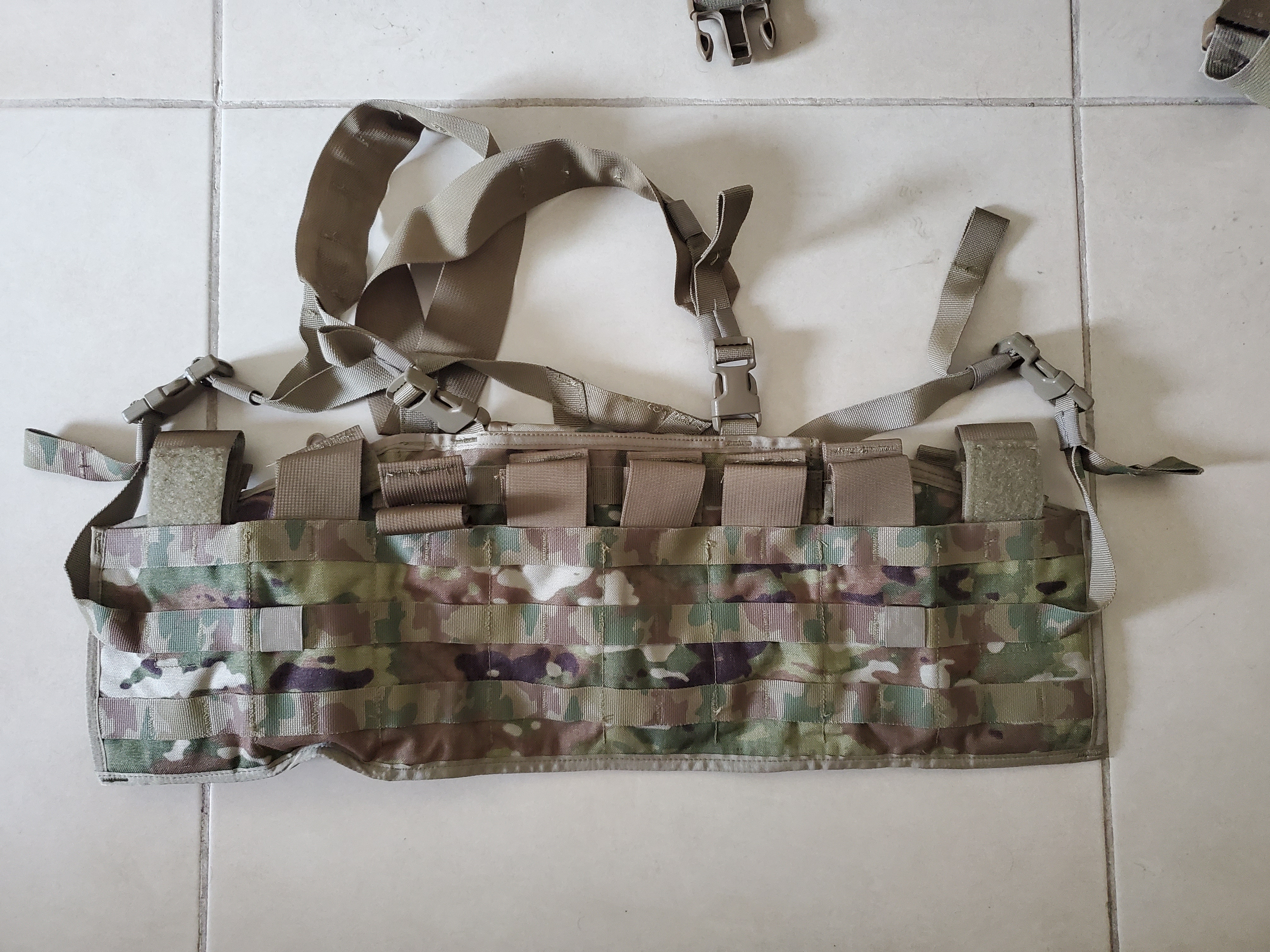
Author’s issued TAP chest rig, unused, straight from RFI.
The Market
Many fantastic companies have grown out of the Global War on Terror. Companies like Eagle Industries, Tactical Tailor, and London Bridge Trading have been around for years, supplying SOF units all throughout the military. Others like First Spear, Viking Tactical, Haley Strategic, and Velocity Systems were born out of the need for better equipment, some even started by SOF veterans with first hand combat experience and a desire to provide better gear to soldiers everywhere.
Where these companies do a better job that what is typically issued, primarily to the conventional forces, is designing gear that is better made, more efficiently designed, and far more comfortable to wear during long term operations. What comes along with that experience and attention to detail that goes into producing these pieces of kit, is a price tag. You can spend anywhere from $150 to $400 on a non-issued chest rig, but when you spend that sort of money you tend to get quality that is hard to surpass. It’s important when choosing your chest rig that you consider manufacturers, and what reputation your equipment has. Personally, I tend to choose equipment and brands that are often used by the best SOF units in the Army, because those units have the ability to choose what they want to take to combat and they more often than not choose the best equipment.
A lot of what is designed is specialized, designed around a weapon system or role like the UW Chest Rig by Velocity Systems or the D3CRX Heavy by Haley Strategic. These specialized pieces of kit are awesome if you want to purchase something that is complete, with built in pouches that fit your needs and are high quality. What is most important to recognize about these chest rigs is that if you want to change something later on, you’ll either need to modify it yourself or through a seamstress, or purchase a whole new chest rig. Sometimes, you can make do with what you’ve got and re-purpose a pouch or two on the carrier, but if you are switching weapon systems you might need a different carrier. Some carriers like the 5.56 Hybrid from Velocity Systems or the Blue Force Gear Ten Speed carrier have MOLLE panels so you can add mission specific pouches or an extra mag pouch to your kit. A lot of these also have mounting options like the TAP does to fit the carrier to your body armor, if you are into that sort of system.
On the opposite end of purpose built are panels that are similar to the TAP system, like the Tactical Tailor MAV system, the Esstac Boar, and the First Spear JOKER. These are awesome because if you have a surplus of quality pouches like I do, you can edit your chest rig as you change rolls and missions. Maybe you need ten magazines on your kit instead of 6, or instead of mag pouches you need M249 drum pouches, or even a large medical pouch. Some of these are one solid panel, like the TAP, but others have a zipper or another method for breaking the panel right in the center for quickly donning and doffing the chest rig. If you want modular, this type of design is about as modular as you can get.
Here are some of the most trusted brands in the business. I’m probably missing a few, there are many good companies:
- Esstac
- Haley Strategic
- Velocity Systems
- Eagle Industries
- Tactical Tailor
- London Bridge Training
- Spiritus Systems
Whatever you do, stay away from brands like Condor, Rothco, NcStar, or Emerson. These are Chinese brands, not suitable for combat use, though you’ll see some very inexperienced soldiers (NCO’s included) that buy this garbage because they don’t know any better. Avoid those brands like the plague.
Whatever you buy, make sure it’s good quality and worth your hard earned dollars.
 The North Fork Rendezvous